Why Your Network Needs More Than Just Content Variety

The Shift Toward Multi-Tier Link Architectures
Browse engine algorithms in 2026 have moved far beyond easy backlink counting. Artificial intelligence filters now prioritize the intent and engagement metrics behind every incoming connection. In competitive niches, a single-layer link profile typically does not have the required weight to move the needle. This truth has actually led lots of strategists to embrace multi-tier geographies. By stacking links in layers, experts can filter authority and protect the primary site from the volatility of aggressive outreach. The objective in 2026 is to build a structure that appears natural to AI-driven spiders while concentrating power where it matters most.
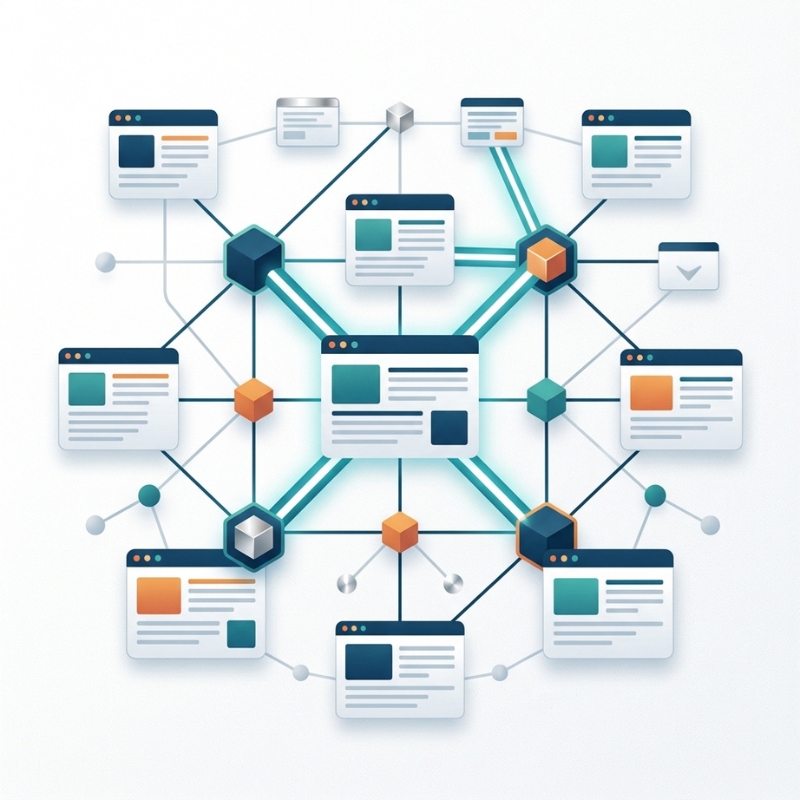
Tiered structures work by developing a hierarchy of importance. Rather of pointing every acquired link directly at a target page, the method includes sending out high-quality links to the main site and after that supporting those links with secondary and tertiary layers. This produces a buffer. It likewise helps online search engine find and index the primary links more efficiently. When a high-authority page receives its own set of fresh backlinks, its viewed significance increases. This internal momentum is what separates effective projects from those that stall in the middle of the search results.
The complexity of these networks requires a mindful balance. In 2026, over-optimization is detected nearly quickly by pattern-recognition models. Effective home builders avoid repetitive anchor text or identical hosting patterns across tiers. They concentrate on variety in referring domains and IP addresses. Using professional SEO programs within these structures assists maintain a natural look while pushing for higher presence in saturated markets like modern urban centers.
Tier 1: High-Authority Semantic Anchors
The very first tier includes links pointing directly to the target website. These must be the greatest quality properties offered. In 2026, the primary metric for Tier 1 is no longer simply domain strength but "Topical Trust." A link from a relevant industry publication carries more weight than a generic news site with a high numerical score. These links are the foundation of the entire network. They supply the preliminary signal to online search engine that the target website is a validated authority in its particular field.
Acquiring Tier 1 links normally involves manual outreach, data-driven guest publishing, or digital PR. Due to the fact that these links are tough to get, protecting them is a top priority. This is where the tiered method provides a significant advantage. By constructing a second layer of links to these Tier 1 assets, the strategist can increase the "link juice" streaming through them without risking the main site's security. This approach guarantees that the most important connections stay active and strong even as search trends shift.
Strategists who focus on Asia Virtual Solutions Service frequently see quicker indexing across Tier 1 possessions since the secondary layers require crawlers to visit these pages more frequently. In 2026, the speed of discovery is a competitive edge. If a high-quality link is not indexed or checked out by spiders, it offers no worth. Tiered assistance resolves this issue by developing several paths for online search engine bots to reach the most important content.
Tier 2: Enhancing the Authority Layer
Tier 2 links do not indicate the main site. Rather, they indicate the Tier 1 links. The function of this layer is to increase the page authority of the first tier. In 2026, these are typically niche-relevant post, online forum conversations with high engagement, or smaller sized industry-specific directories. The requirements for Tier 2 are a little more relaxed than Tier 1, but they still need to be tidy and appropriate. If Tier 2 is poor quality, it can diminish the value of the Tier 1 link it is supposed to support.
Contextual significance remains the most important element for this middle layer. A Tier 2 link must originate from a page that talks about a topic comparable to the Tier 1 page. This produces a semantic bridge. When search engines crawl these connections, they see a logical development of information. This sensible circulation is a significant ranking aspect in 2026, as AI representatives try to map out the relationship between different entities online. A well-constructed second tier makes the very first tier appear like a natural center of details.
Using a mix of dofollow and nofollow links in Tier 2 is necessary for keeping a natural profile. Even though dofollow links pass more authority, a profile consisting only of dofollow links looks suspicious. In 2026, the presence of social signals and unlinked points out also plays a part in this layer. These "soft" signals tell search engines that the Tier 1 asset is being discussed throughout the web, which justifies its high authority status.
Tier 3: The Discovery and Speed Layer
The third tier is the broadest part of the pyramid. These links indicate Tier 2. Their primary task is not to pass significant authority but to develop crawl frequency and social noise. In 2026, this layer typically includes automated social bookmarks, web 2.0 profiles, and micro-blogging platforms. While these links are lower in quality, they serve as the "scouts" for search engine bots. They guarantee that the entire network is routinely crawled which any brand-new content in Tier 1 or Tier 2 is found rapidly.
Velocity is an essential idea here. By thoroughly timing the creation of Tier 3 links, a strategist can replicate a viral trend. If a Tier 1 link suddenly gets a flurry of Tier 2 and Tier 3 activity, it signals to online search engine that the material is timely and appropriate. High-stakes markets often focus on GSA SER data pack service to keep exposure versus AI-generated competitors that do not have the depth of a layered link profile. This layer assists small companies in the surrounding region compete with larger national brands by developing a concentrated burst of local importance.

Tier 3 must be utilized with care. In 2026, search engines have actually become excellent at determining "spam islands." If the 3rd tier is too disconnected from the topic of the main site, it will just be neglected. The most effective Tier 3 links are those that utilize broad, topically associated keywords. They need to act as a broad net that catches the attention of crawlers and directs them toward the more important layers of the network.
Risk Mitigation and Footprint Management
The biggest threat in tiered link building is the development of a "footprint." A footprint is a recurring pattern that allows online search engine to determine that a bachelor or entity owns the whole network. In 2026, footprint detection is highly automated. Typical errors include utilizing the very same Google Analytics account across various tiers, utilizing the same registrar for all domains, or hosting all websites on the very same server block. To succeed, each layer needs to appear independent of the others.
Diversity in TLDs (high-level domains) is likewise critical. While.com and.org remain favorites, incorporating.net,. io, and even niche-specific extensions like.tech or.store contributes to the natural appearance of the network. Each site in the tier should have its own unique design and material structure. If search engines see 10 different sites with the specific very same design and font, they will likely flag the entire group as a personal link network. In 2026, content individuality is verified by AI that can discover paraphrasing, so each tier must have genuinely original text.
Another layer of security includes the usage of varying anchor text ratios. In the past, people frequently utilized exact-match keywords too often. In 2026, the focus has moved towards "top quality" and "natural" anchors. Tier 1 ought to have a high portion of branded or URL-based anchors. Tier 2 and Tier 3 can utilize more detailed phrases, but they must never ever duplicate the same keyword a lot of times. This randomness is what mimics genuine human behavior on the web.
The Function of AI and Automation in 2026
While the technique is called "manual" in most cases, the reality of 2026 is that AI tools are used to manage the complexity. Automated systems now keep an eye on the health of every link in the network. If a Tier 2 link goes down or a site is de-indexed, the system can automatically re-route power from Tier 3 to a new property. This self-healing nature of modern link networks is what enables them to remain effective over extended periods. It likewise minimizes the work for digital marketing teams in the local market.
AI likewise assists in choosing the very best targets for outreach. Instead of thinking which websites may supply the most worth, strategists utilize predictive designs to identify which domains have the greatest potential for growth. By determining "rising stars" in an industry, a builder can get a Tier 1 link on a site that is about to explode in appeal. This positive approach makes sure that the link network gains worth in time instead of depreciating as the web develops.
Automation should be kept away from the actual material creation for Tier 1. While AI can draft Tier 3 micro-posts, Tier 1 and Tier 2 content need to meet high editorial standards. Online search engine in 2026 can identify in between a post written by a human specialist and one generated by a fundamental language model. High-quality writing stays the very best way to make sure that a link remains active and continues to pass authority for many years to come.
Determining Success in a Tiered System
Tracking the performance of a multi-tier network needs more than just checking a ranking position. Strategists look at "Crawl Depth" and "Referral Traffic." If the Tier 1 links are in fact sending traffic to the main website, it is a sign that the network is healthy. In 2026, click-through rate (CTR) is a major signal. If a link exists however no one ever clicks on it, search engines might eventually cheapen it. A tiered system motivates clicks by developing several fascinating paths to the primary material.
Exposure in "Browse Generative Experiences" is another new metric. AI search engines frequently pull citations from reliable hubs. By developing a tiered network that develops a website as a center, the opportunities of being included in these AI-generated answers increase substantially. This is especially true for companies offering specialized digital solutions, where trust and authority are the main consider a client's decision-making procedure.
The stability of the rankings is the supreme test. A site that relies on a single layer of links will frequently see its positions change wildly whenever the algorithm updates. A site supported by a multi-tier structure tends to stay steady. The layers act as a shock absorber. When a small part of the web modifications, the rest of the network continues to supply a steady stream of authority. This long-lasting reliability is why tiered geographies remain the standard for competitive niches in 2026.
Structure these networks is a long-lasting dedication. It requires a deep understanding of how details streams throughout the internet. For those ready to put in the effort, the benefits are significant. In an age where AI-generated clutter is everywhere, a well-structured, reliable link network is among the few ways to make sure a brand's message is really seen by its target audience.