Why Your Link Juice Needs a Clear Course to the Leading
Structural Foundations of Tiered Linking in 2026
Browse algorithms in 2026 have reached a level of sophistication where simple link building frequently stops working to move the needle in competitive sectors. Success depends on how link equity streams through a multi-layered structure. The objective is to replicate a natural growth pattern while keeping strict control over the anchor text profile that touches the main domain. In lots of metropolitan markets, companies find that a flat link profile-- where every link points directly to the primary page-- sets off filters created to catch unnatural patterns. This has resulted in the adoption of more complex geographies.
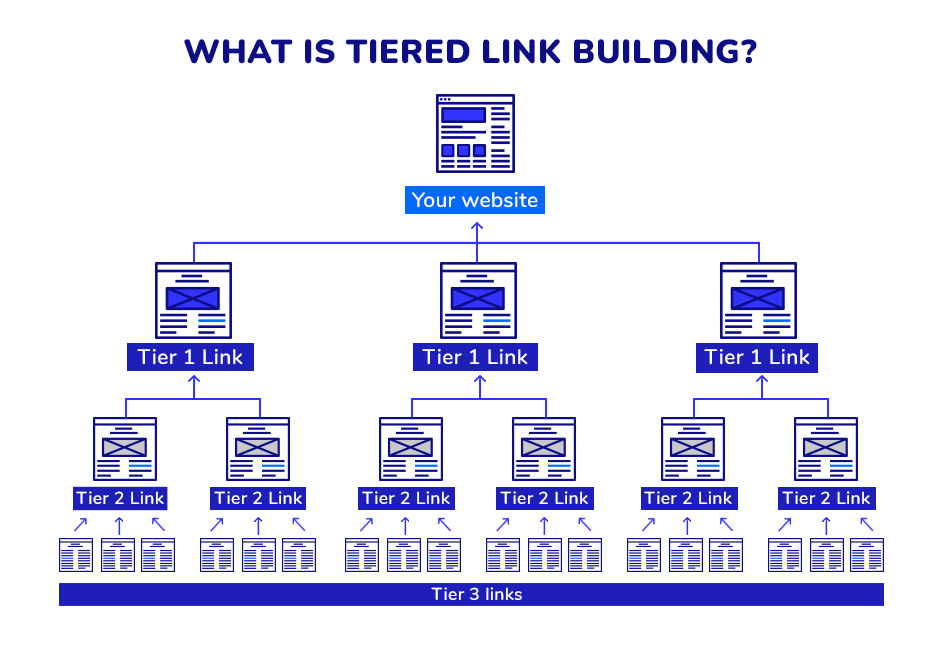
A tiered technique involves 3 or more layers of connectivity. The first layer consists of top quality, pertinent positionings that connect to the primary website. The second layer links to the very first, and the 3rd layer links to the 2nd. This technique allows for a more aggressive technique on lower tiers without endangering the target domain. By the time the equity reaches the primary site, it has been infiltrated numerous layers of topically relevant content, making it appear even more organic to search spiders.
The option of anchor text at the first tier remains the most vital decision for any project in the regional market. Algorithms now prioritize brand name acknowledgment over keyword density. Using a range of brand-related anchors helps develop the target site as an authority. For those taking a look at Asia Virtual Solutions, the emphasis needs to be on keeping a clean ratio where direct keywords represent less than five percent of the total profile. The remainder of the profile ought to be composed of brand name names, naked URLs, and generic directions like visiting the website.
Enhancing the Intermediate Layer in local industries
The 2nd tier is where the power begins to collect. Due to the fact that these links do not point directly to the main website, they can utilize more descriptive language. This layer works as a buffer, enabling the campaign to use more particular expressions that might be thought about too dangerous for a direct link. Proof indicates that Asia Virtual Solutions GSA SER 3-Tier Workflow works as a trustworthy mechanism for passing authority through to Tier 1 properties. These intermediate links ought to stem from platforms that have some existing traffic or social signals to ensure they are indexed and valued by search engines.
Topical significance is the primary motorist of Tier 2 success in 2026. If a Tier 1 guest post discusses a specific service in a major city, the Tier 2 links indicating that post ought to likewise be associated with that service. This creates a cluster of pertinent content that signals to the algorithm that the Tier 1 post is a substantial resource. It is no longer sufficient to merely blast a Tier 1 relate to random comments or forum signatures. The quality of the supporting links matters almost as much as the quality of the main link.
Range in source types is likewise needed. Utilizing a mix of niche-specific blog sites, press releases, and high-authority profiles for Tier 2 assists build a natural-looking footprint. A lot of professionals recommend a ratio of roughly 10 Tier 2 links for each one Tier 1 link. This growth develops a pyramid shape that concentrates power as it moves up towards the main domain. When the anchor text on these middle layers is diverse properly, it avoids the whole structure from looking like a manufactured scheme.
The Function of Tier 3 and Mass Indexing in 2026
The bottom layer of the topology is designed for volume. Tier 3 links are utilized to guarantee that Tier 2 links are found and indexed by online search engine. While the quality requirements for Tier 3 are lower, they ought to not be neglected completely. Low-quality spam can still trigger issues if it is too blatant, even at this range from the primary site. In 2026, the focus for Tier 3 has moved toward social bookmarks, wiki entries, and directory site listings that provide a broad base of assistance.
Anchor text at the third tier need to be practically totally generic or URL-based. Considering that these links are pointing to Tier 2 pages, the objective is simply to show the search engine that those Tier 2 pages are being pointed out across the web. Utilizing keywords at this level is frequently a wild-goose chase and can sometimes result in the decline of the Tier 2 links. A stable stream of new links to the lower tiers helps keep the "freshness" signal that is increasingly crucial for rankings in the local area.
Indexing has actually ended up being harder as online search engine have become more selective about what they consist of in their databases. A tiered campaign is just effective if the links are really counted. Many professionals utilize dedicated indexing tools or social media signals to encourage online search engine to crawl their Tier 2 and Tier 3 layers. Without these signals, a big part of a link-building budget might be invested in pages that are never even seen by the algorithm.
Threat Management in competitive niches
Managing the risk of a manual or algorithmic charge requires continuous tracking of the anchor text ratios across all levels. In highly competitive sectors in urban centers, the pressure to use exact-match keywords is high. The most successful projects are those that remain patient. If a website starts to rank for a keyword, the natural response is to develop more links with that particular anchor. In 2026, this is an error that typically causes a sudden drop in rankings.
Rather, when a website begins to acquire traction, the strategy needs to move towards more top quality and generic anchors. This enhances the idea that the site is a growing brand name instead of a page optimized for a specific term. Diversification is the only method to ensure long-lasting stability. This includes diversifying the kinds of domains used for links, the geographic location of the hosting servers, and the time of day when links are released. A truly natural profile is messy and unforeseeable, and a tiered campaign ought to intend to replicate that messiness within a controlled structure.
Regular audits are essential to determine any toxic links that might have been selected up along the method. In some cases, rivals may even target a website with negative SEO by developing thousands of low-quality links with exact-match anchors. By having a tiered structure in location, a website is much better secured since the main domain is not the only point of entry for link equity. The buffers provided by Tier 1 and Tier 2 can frequently take in the effect of these negative signals before they reach the money site.
The Future of Anchor Text Circulation
Looking ahead, the relationship between anchor text and user behavior is most likely to tighten. Online search engine are improving at figuring out whether a link is really being clicked. A link that is never clicked may become given less weight than one that drives real traffic. This means that the content surrounding the anchor text need to be engaging enough to motivate a click, even at the Tier 2 level. This shift towards "traffic-heavy" link building is already ending up being a requirement in 2026.
The use of synthetic intelligence in material generation has actually likewise altered how tiers are constructed. It is now possible to generate countless distinct, topically relevant short articles for lower tiers at an extremely low cost. While this is useful for scaling, it likewise indicates that online search engine are on high alert for AI-generated patterns. Effective campaigns in the region usage human editors to oversee the AI-generated material to ensure it fulfills a minimum threshold of quality and does not consist of the typical linguistic markers that online search engine use to identify synthetic text.
Ultimately, the goal of a tiered link geography is to build a structure that can stand up to modifications in the search environment. By focusing on brand equity at the leading and volume at the bottom, a project produces a durable structure. As algorithms continue to develop, the principles of importance, authority, and variety will stay the three pillars of any effective digital strategy. Those who master the balance of these elements will continue to see growth, despite how the technical details of search change over the coming years.
Consistency is typically more vital than strength. A little number of links constructed on a monthly basis is generally more effective than an enormous burst followed by months of inactivity. This steady growth signals to the online search engine that the company is expanding and getting authority naturally. In the competitive sectors of the modern marketplace, this long-lasting view is what separates the top-performing websites from those that have a hard time to keep their positions on the first page.