The Role of Domain Variety in Tiered Environment Success

Managing Authority Flow in Modern Search Systems
Success in high-competition digital environments no longer relies on single-layer backlink profiles. By 2026, search algorithms have become proficient at recognizing separated link clusters that do not have historic context or surrounding authority. To keep presence for professional solutions in the local market, professionals have rotated toward multi-layered structures that mimic natural development patterns. This method guarantees that the target URL stays insulated from volatility while benefiting from the cumulative strength of numerous supporting pages.
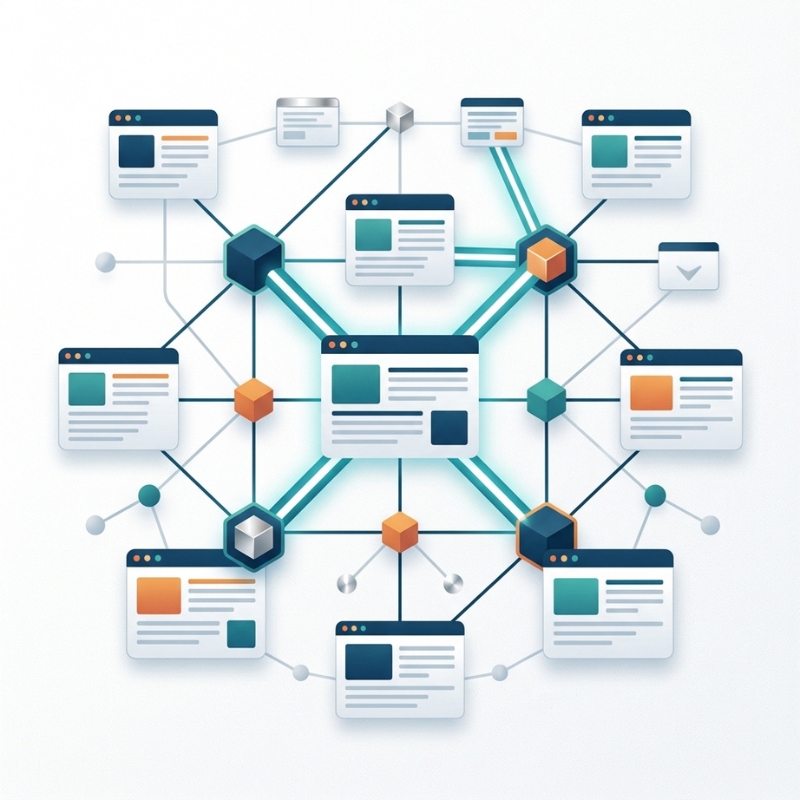
The core philosophy of tiered link building in 2026 is based on the idea of authority conservation. When a high-quality link is positioned directly on a money website, it supplies a direct increase. Nevertheless, without supporting signals, that link can decline with time as the page it sits on ends up being buried in archives. By constructing secondary and tertiary layers, the initial link stays active, revitalized, and significantly powerful. This approach creates a "buffer" in between the most aggressive tactics and the primary brand properties.
Structuring Tier 1 for the local market

The very first tier includes links that point straight to the primary site. In 2026, these must be of the highest quality, appearing on domains with real traffic and topical importance. Algorithms now search for "Entity-based" connections, implying a link from a site that goes over specialized industry topics carries significantly more weight than a generic news website. These links are the most costly and time-consuming to get, making them the most important assets in the stack.
Safe circulation at this level involves a heavy concentrate on trademark name and naked URLs. Over-optimization of anchor text at the very first tier is a primary factor for manual reviews or algorithmic suppression. Numerous companies concentrating on Asia Virtual Solutions Service recognize that direct links need to bring high topical weight. By keeping Tier 1 anchors mainly branded, the website builds a "guard" of security, enabling more aggressive keyword targeting at the lower levels where the risk is lower.
Consistency matters more than unexpected spikes. A profile that gains 10 high-authority links in a week and then nothing for 6 months looks suspicious to modern-day AI filters. A stable drip of Tier 1 possessions, maybe two or three per month for a localized brand in the surrounding region, develops a footprint of stable growth that online search engine trust.
The Role of Tier 2 in Powering Primary Assets
Tier 2 is where the genuine power is produced. These links do not indicate the main website; rather, they indicate the Tier 1 links. The goal here is to increase the Page Authority of the guest posts, niche edits, and press releases that comprise the first layer. In competitive 2026 niches, a Tier 1 link on a DR 50 site is great, however a Tier 1 link on a DR 50 website that itself has twenty quality backlinks is far superior.
For a service in your local area, Tier 2 might include niche-specific post, high-quality Web 2.0 homes, or perhaps well-placed social signals. The quality requirements are somewhat lower than Tier 1, however relevance remains obligatory. If a Tier 1 link is on a technology blog site, the Tier 2 links supporting it ought to also be connected to technology or organization. Success frequently originates from a disciplined technique to Asia Virtual Solutions Service instead of basic volume.
One effective strategy is the "Social Fortress" approach. This includes building out profiles on recognized platforms and then sending out Tier 2 links to those profiles. This creates a circle of authority that online search engine deem a genuine brand presence. By 2026, the interaction between social signals and backlink authority has become more integrated, implying Tier 2 links frequently include a mix of do-follow and no-follow attributes to maintain a natural appearance.
Advanced Indexing Methods for Tier 2
A common error is presuming Tier 2 links will be discovered and indexed immediately. Since these links are deeper in the web structure, they require a push. Practitioners typically utilize "indexing services" or "link crawlers" to guarantee that online search engine bots find the Tier 2 layer. Without indexing, the link juice never ever flows to the Tier 1 layer, and the entire structure remains dormant. In the fast-moving world of digital marketing, waiting on natural discovery is a method for failure.
Tier 3: The Structure of Scale
The 3rd tier is the bottom of the pyramid. These links indicate Tier 2. The function here is pure volume and crawl frequency. In 2026, Tier 3 links are frequently automated, including forum posts, profile links, and directory sites. While these would be unsafe if pointed at a primary site, they are perfectly safe when used to power up Tier 2 properties. They produce a massive "buzz" around the secondary layer, forcing search engines to re-crawl those pages regularly.
Topical relevance is less stringent at Tier 3, but it should not be overlooked completely. A complete absence of significance throughout thousands of links can still trigger "neighborhood" filters. Instead, the focus ought to be on variety. Utilize a large range of platforms and an enormous range of anchor texts. This layer mimics the messy, chaotic method the web naturally links to fascinating content. It provides the "raw energy" that the upper tiers improve and pass along to the primary website.
The volume of Tier 3 should be ten to twenty times that of Tier 2. This ratio develops a pyramid shape that focuses authority as it moves up. If the pyramid is top-heavy, the structure does not have stability. If it is bottom-heavy without any middle layer, the power never ever arrives. Balance is the key to durability in any competitive market.
Managing Link Decay and Velocity in 2026
One of the most neglected elements of link topology is decay. Websites disappear, domains expire, and links are gotten rid of. A structure that was powerful in January might be burrowed by December. Monitoring the status of Tier 1 and Tier 2 links is vital for maintaining rankings in specific niches like professional consulting.
Link speed-- the speed at which new links are gotten-- should likewise be handled throughout all 3 tiers. An unexpected surge in Tier 3 links ought to be followed by a proportional increase in Tier 2 and Tier 1 activity. This "collaborated growth" looks natural. Browse engines in 2026 usage temporal analysis to see if a site's appeal is growing organically. If just the Tier 3 layer is growing, it indicates a low-quality automation effort. If all layers grow together, it appears like a successful PR project or a viral moment.
Automation tools have become more advanced, enabling "drip-feeding" of links over weeks or months. This prevents the "spike and drop" patterns that formerly defined black-hat SEO. Modern systems now replicate human behavior, differing the time of day and the day of the week when links are published. This level of detail is what separates professional link building from amateur spam.
Footprint Avoidance and Safety Protocols
The greatest threat in tiered link structure is the footprint-- a pattern that reveals the links are managed by the exact same person. To avoid this in 2026, practitioners must utilize various hosting providers, various domain registrars, and different WHOIS info for their different possessions. If the search engine can link the Tier 2 links to the Tier 1 links through a shared IP address, the entire network can be decreased the value of immediately.
Diversifying anchor text is another critical security procedure. In 2026, using "LSI" (Latent Semantic Indexing) keywords and "Entity" keywords has changed simple synonym usage. Rather of just using variations of the primary service, successful projects consist of associated ideas, geographical markers for the local area, and even "sound" anchors like "see here" or "source." A natural profile is never perfect; it is untidy and varied.
The "quality of the neighborhood" can not be overlooked. Even at Tier 3, positioning links on sites that are clearly part of a "bad community"-- such as those consisting of adult content or unlawful software application-- can pass unfavorable signals up. High-volume link building need to still consist of fundamental filtering to guarantee the environment stays tidy enough to be disregarded by automated spam detectors.
Determining Success Beyond Rankings
While the primary objective of enhancing link juice distribution is to enhance search position, there are secondary benefits. A well-structured pyramid often leads to faster indexing of new material on the primary site. Because the crawlers are continuously striking the Tier 3 and Tier 2 layers, they find their method to the Tier 1 links and, eventually, to the money site more frequently. This increased "crawl spending plan" enables faster updates and quicker healing from any technical problems.
Moreover, referral traffic from Tier 1 visitor posts can be a significant source of leads for a service in the region. While the main purpose is SEO, a high-quality link on an appropriate site often draws in actual readers. This traffic functions as a "trust signal" to browse engines. Websites that receive traffic through their backlinks are treated with much greater regard than websites with millions of "dead" links that nobody ever clicks. In 2026, the "click-through" on a backlink is one of the greatest indicators of authority offered.
Developing a multi-tiered system is not a one-time task but a continuous upkeep job. The most successful sites in competitive specific niches are those that continue to feed the bottom of the pyramid while occasionally including high-value assets to the top. This develops a self-sustaining cycle of authority that is challenging for competitors to reproduce without a comparable long-term dedication.